What it is
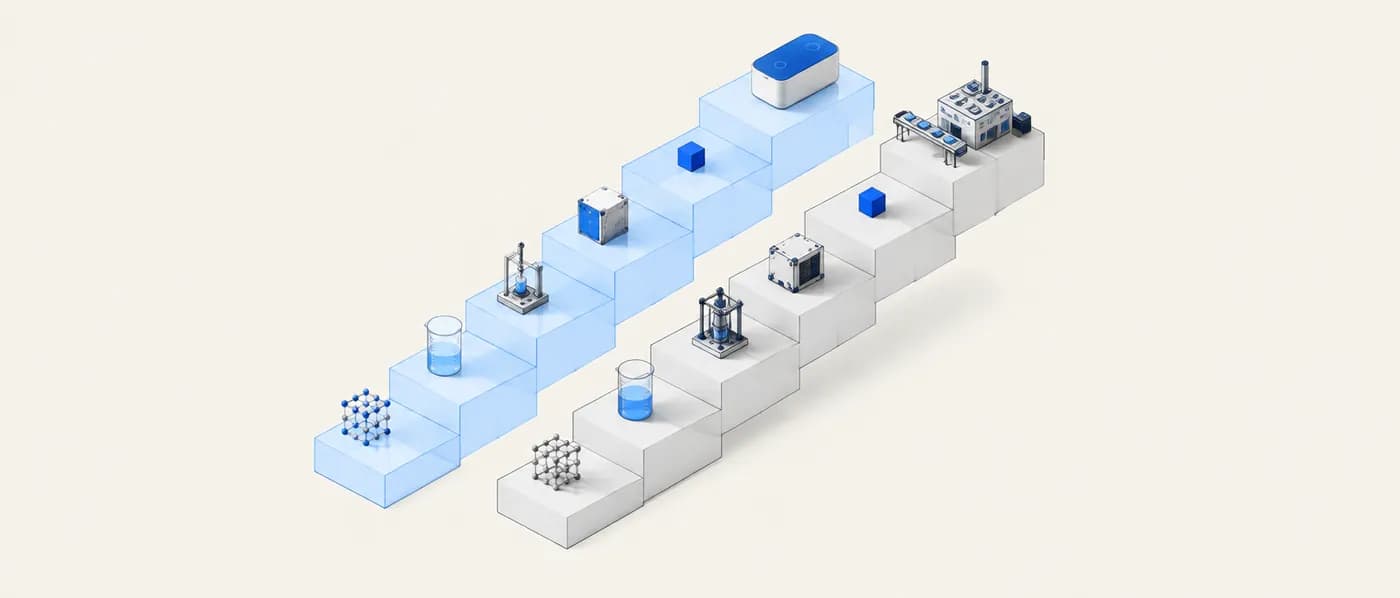
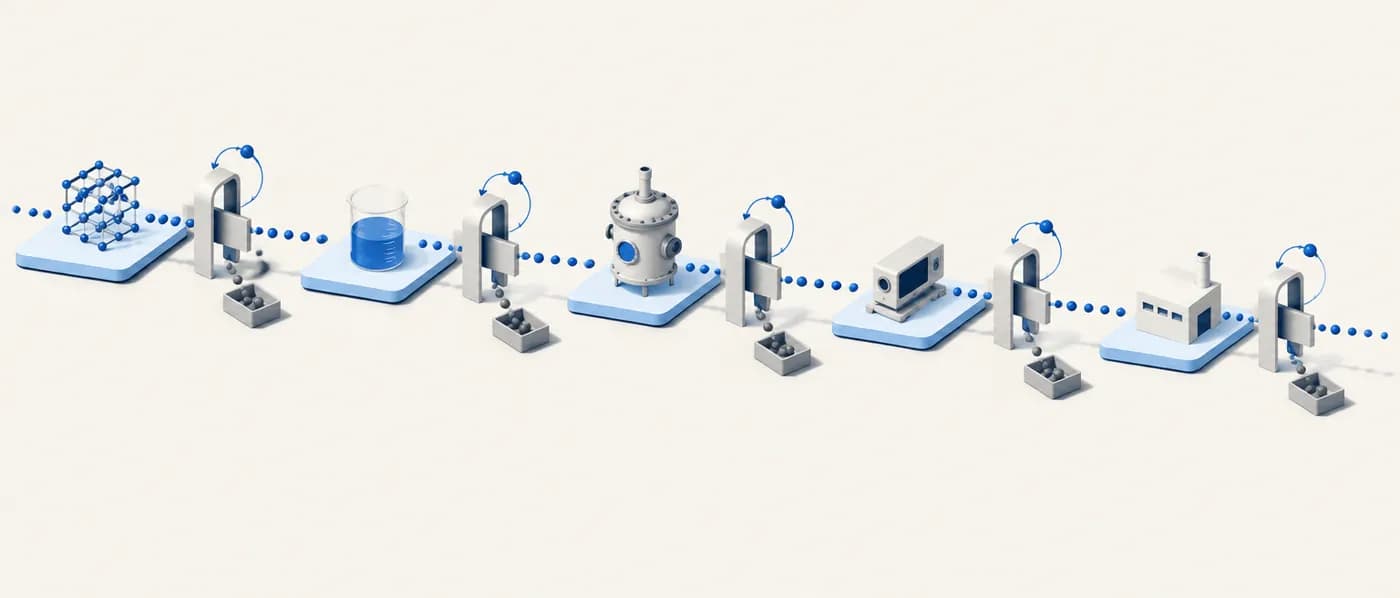
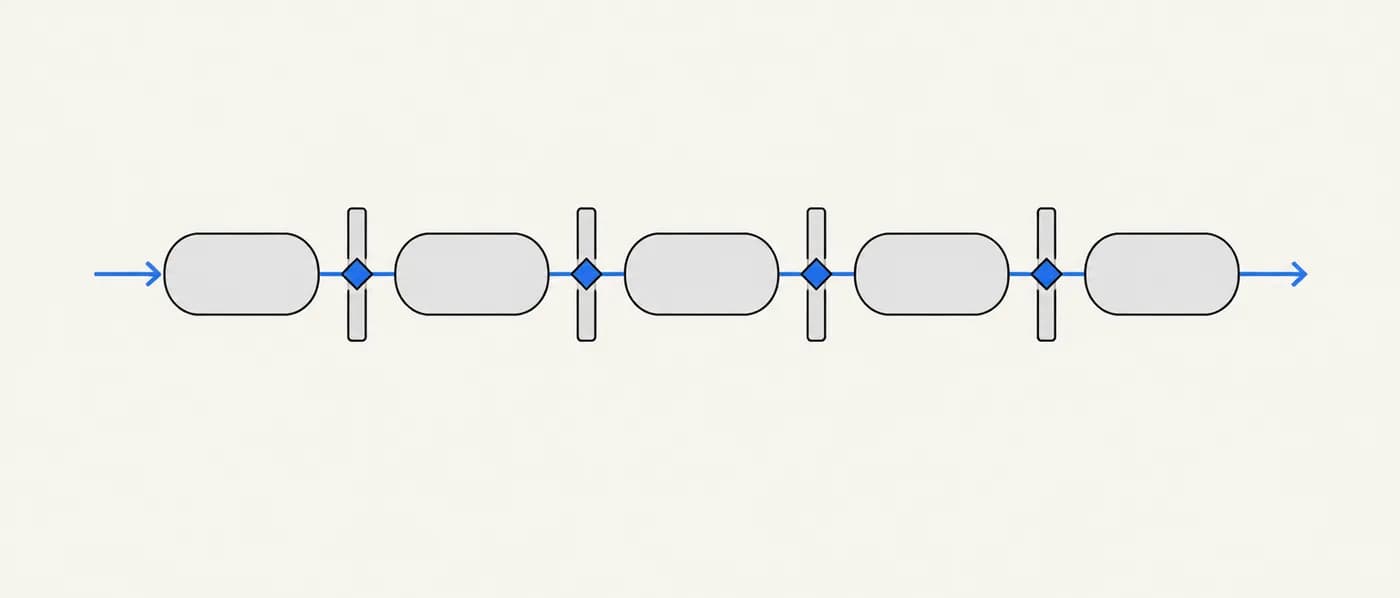
Stage-Gate is a process for managing new-product and technology development, introduced by Robert G. Cooper in the late 1980s and described in his 1990 Business Horizons article and his book Winning at New Products. A project moves through a series of stages — each a set of activities that gather information and reduce risk — separated by gates, where a decision-making group reviews the evidence and decides whether to continue.
In Cooper’s typical product-development version, a discovery phase is followed by stages for scoping, building the business case, development, testing and validation, and launch, with a gate before each stage and a post-launch review. At each gate the outcome is one of four decisions: Go (fund the next stage), Kill (stop), Hold (pause, usually for resource reasons) or Recycle (rework the current stage). Gate criteria are usually split into must-meet criteria, which are pass/fail, and should-meet criteria, which are scored and weighted to help prioritise among projects that pass.
Early-stage research does not fit a product process neatly, because the outcome of a technology programme is knowledge or a capability rather than a defined product. Cooper described a lighter variant for technology development projects, with fewer stages and more flexible gate criteria that focus on technical feasibility and strategic fit. Materials R&D programmes often use this kind of variant, combined with readiness levels to describe the maturity reached at each gate.
Why it matters for R&D decisions
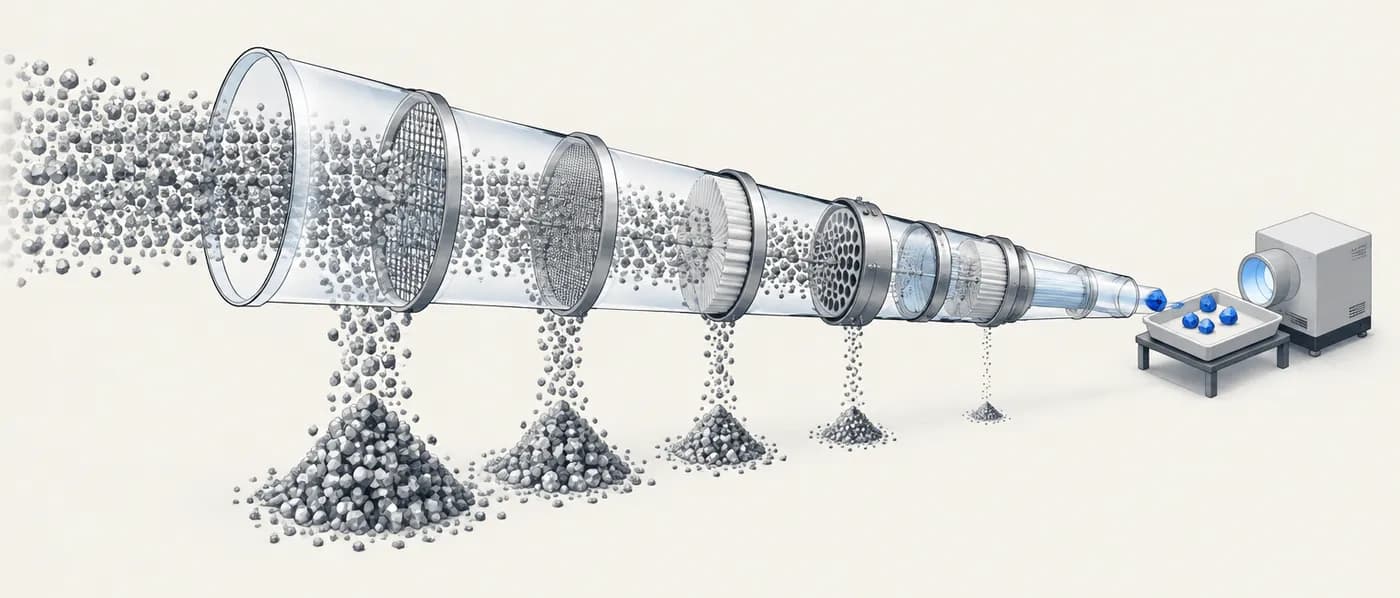
Materials programmes can absorb years of effort without a clear decision to stop. Explicit gates make continuing a choice rather than a default, and agreed criteria make the choice defensible. Gates also force the right evidence to be gathered at the right time: there is no point running a full cost model on a material that has not passed a stability check, and no point scaling up a synthesis before the freedom-to-operate question has been asked. For a portfolio of candidates, consistent gate criteria make projects comparable.
The formula
Gate decision = Kill if any must-meet criterion fails; otherwise compare should-meet score S = Σ wᵢ · sᵢ with the agreed threshold (and with other projects competing for the same resources).
- wᵢ
- Weight of should-meet criterion i (weights sum to 1)
- sᵢ
- Score for criterion i, on an agreed scale such as 0–10
- S
- Weighted should-meet score used to rank projects that pass all must-meets
Scoring structures vary by organisation. The key principle is that must-meet failures cannot be compensated by high should-meet scores.
How to apply it, step by step
- 1Define the stages for your type of project
For a new material, a common sequence is: idea and screening, lab synthesis and property validation, application testing in a representative device, scale-up and qualification, and launch or transfer. Fewer, well-defined stages work better than many vague ones.
- 2Write must-meet criteria for each gate
These are pass/fail requirements: stability, safety, no restricted elements, minimum performance. Any single failure means Kill or Recycle, regardless of other strengths.
- 3Write should-meet criteria and weights
These capture attractiveness: market size, strategic fit, technical advantage, cost position, risk. Agree a scoring scale, weights and a threshold before the review.
- 4Specify the deliverables for each gate
List the evidence the team must bring: data, analysis, cost estimate, risk register. Gate reviewers should be able to decide from the deliverables alone.
- 5Hold the gate and record the decision
Decide Go, Kill, Hold or Recycle, record the reasoning against each criterion and, for Go, approve the resources for the next stage only.
- 6Review the process itself
Track how often gates kill projects and why. A gate that never kills anything is not doing its job; a gate that kills late projects for reasons visible early belongs earlier.
Worked examples
Gate: “enter lab synthesis” for a computed candidate
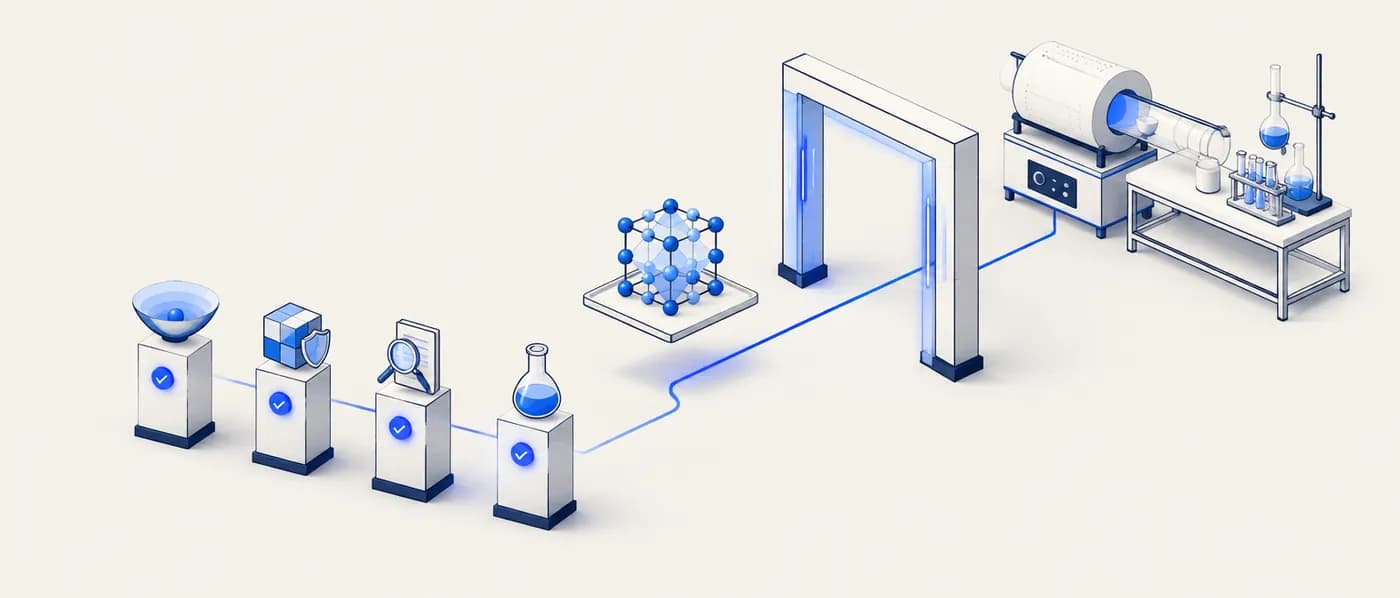
A materials team uses one gate to decide whether a computationally identified candidate deserves lab time. The thresholds below are an example policy, not a universal standard.
- 01Must-meet 1: energy above the convex hull ≤ 25 meV/atom in at least two independent databases.
- 02Must-meet 2: no element on the organisation’s restricted list without a credible substitute.
- 03Must-meet 3: at least one synthesis analogue (a recipe for a closely related composition or structure) exists.
- 04Candidate A passes all three → proceed to should-meet scoring. Candidate B is on the hull in one database but 60 meV/atom above it in another → fails must-meet 1 → Recycle (investigate the discrepancy) rather than Go.
Cheap evidence (database checks, a prescreen) protects expensive work (synthesis and testing). Put the cheap checks at the earliest gate.
Scoring should-meet criteria (hypothetical weights and scores)
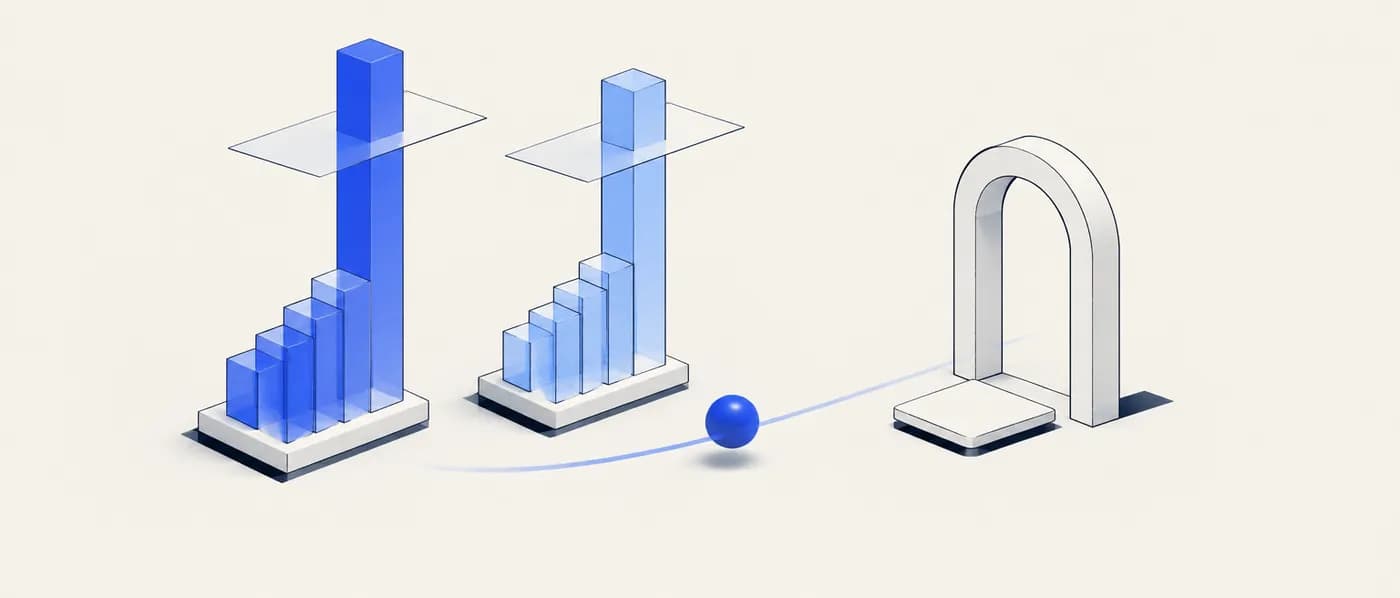
Two projects that passed all must-meet criteria compete for one development slot. Weights, scores and the 6.0 threshold are hypothetical.
- 01Weights: strategic fit 0.20, technical feasibility 0.25, market attractiveness 0.25, competitive advantage 0.15, risk 0.15 (sum = 1.00).
- 02Project X scores 8, 6, 7, 7, 5 → S = 0.20×8 + 0.25×6 + 0.25×7 + 0.15×7 + 0.15×5 = 1.60 + 1.50 + 1.75 + 1.05 + 0.75 = 6.65.
- 03Project Y scores 6, 8, 6, 5, 7 → S = 1.20 + 2.00 + 1.50 + 0.75 + 1.05 = 6.50.
- 04Both exceed 6.0. With one slot, X is preferred; the difference (0.15) is small, so the reviewers also discuss whether any score is uncertain enough to change the order.
Scores support a decision; they don’t make it. When totals are close, discuss the inputs rather than the decimals.
Kill criteria agreed in advance for a catalyst programme
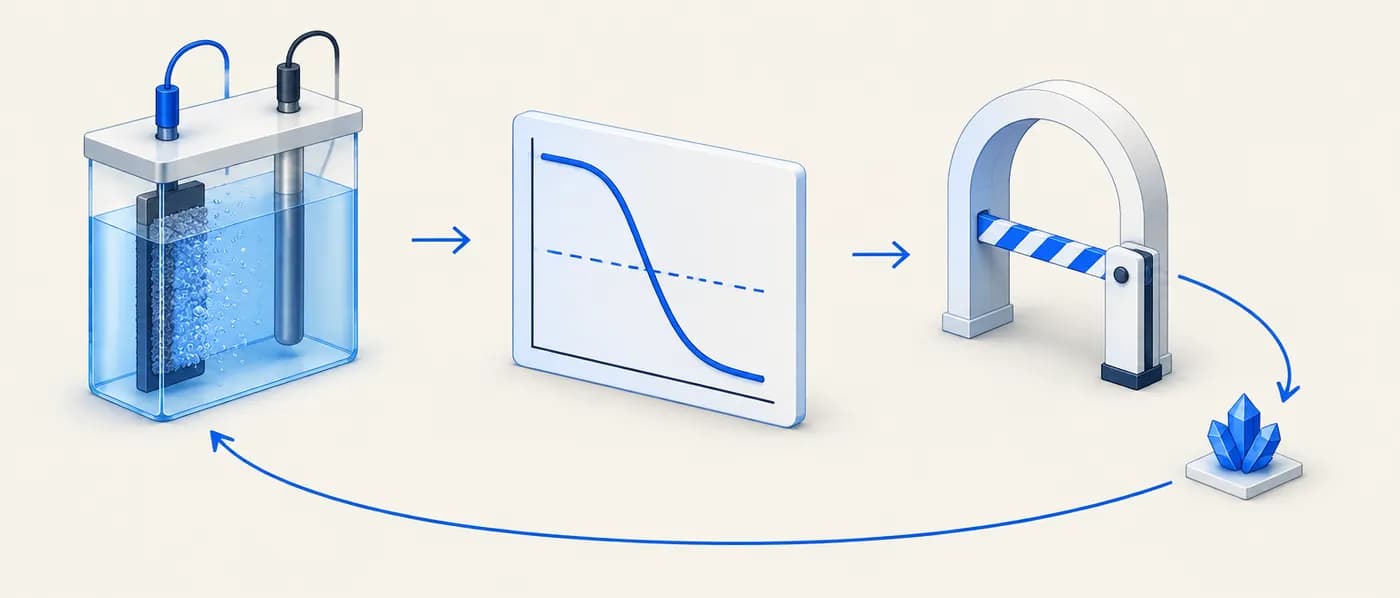
Before a durability study, a team developing a non-precious electrocatalyst agrees what result would end the programme. The threshold is a hypothetical internal target.
- 01Agreed before testing: if mass activity falls by more than 40% during the accelerated stress test, the gate decision is Kill or Recycle (new composition), not Go.
- 02Result: activity falls by 55%.
- 03Because the criterion was agreed in advance, the decision is quick: Recycle to explore a stabilised composition, with a time and budget limit.
- 04Had the threshold been set after the result, the temptation would have been to argue that 55% was acceptable.
Pre-agreed kill criteria are the single most valuable feature of a gate.
Gate decisions
| Decision | Meaning | Typical trigger |
|---|---|---|
| Go | Approve and resource the next stage | All must-meets pass; should-meet score above threshold and competitive |
| Kill | Stop the project and release resources | A must-meet fails with no credible fix, or the opportunity disappears |
| Hold | Pause; the project is worthwhile but not resourced now | Passes criteria but ranks below other projects |
| Recycle | Repeat or rework the current stage | Evidence is missing, inconsistent or close to a threshold |
When to use it — and when not to
- For any programme that will consume significant lab, pilot or capital resources over months or years.
- When managing a portfolio of candidate materials or projects competing for the same resources.
- When decisions must be defensible to management, partners or funders.
- When moving from research into development, where costs per stage rise sharply.
- For very early exploratory research where the questions are not yet defined — use light-touch milestones instead.
- With so many gates and deliverables that the process slows learning more than it reduces risk.
- As a substitute for technical judgement: criteria guide the decision but don’t replace discussion of the evidence.
Common mistakes
Applying it in Lattice Graph
Use LatticeGraph to gather the evidence for early gates quickly and record it in a form reviewers can audit.
- 01Check stability across sources and the cross-source confidence for each candidate to evaluate stability must-meets.
- 02Review element supply-risk indicators, synthesis analogues and patent landscape signals as inputs to other early-gate criteria.
- 03Assemble the shortlist, evidence and open risks into your evidence pack as the gate deliverable, with provenance for every number.
Frequently asked questions
Is Stage-Gate just a waterfall process?
No. Stages can include iterative work, and many organisations combine Stage-Gate with agile practices inside stages. The defining feature is explicit investment decisions at gates, not a fixed sequence of tasks.
How many gates should a materials programme have?
Enough that each gate precedes a significant increase in spending — typically before lab synthesis, before application testing, before scale-up and before launch or transfer. Four or five is common.
Who should sit on a gate review?
People who own the resources being requested and can make the decision, plus technical reviewers who understand the evidence. The project team presents but should not be the sole decision-maker.
How does Stage-Gate relate to TRL?
They are complementary. TRL describes how mature the technology is; Stage-Gate governs the decisions to invest in raising it. Many teams require a minimum TRL as a must-meet criterion at particular gates.
References & further reading
- [1]Cooper, R. G. (1990). Stage-gate systems: A new tool for managing new products. Business Horizons, 33(3), 44–54.The article that introduced Stage-Gate to a wide audience.
- [2]Cooper, R. G. (2017). Winning at New Products: Creating Value Through Innovation, 5th edition. Basic Books.Full description of stages, gates, criteria and scoring.
- [3]Cooper, R. G. (2006). Managing technology development projects. Research-Technology Management, 49(6), 23–31.The lighter Stage-Gate variant for technology development and research projects.
- [4]Cooper, R. G. (2008). Perspective: The Stage-Gate idea-to-launch process — update, what’s new, and NexGen systems. Journal of Product Innovation Management, 25(3), 213–232.Later developments, including flexibility and adaptation of the process.