What it is
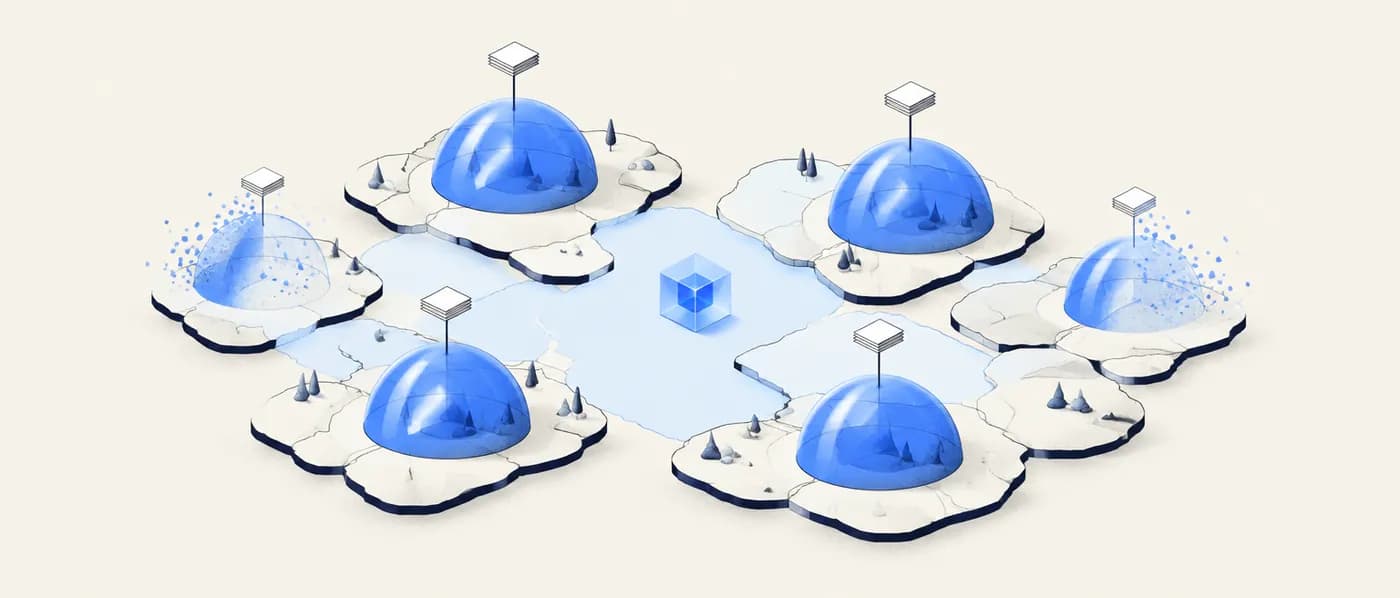
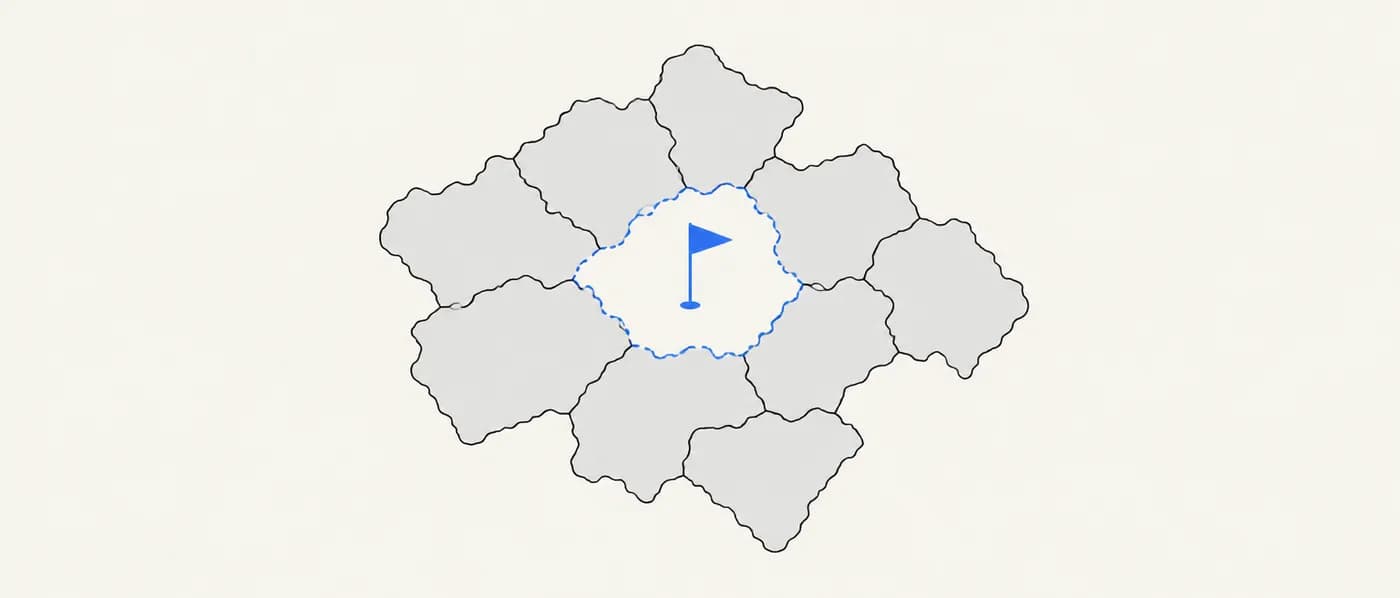
Freedom to operate is the question of whether a product or process can be commercialised in a given country without infringing the valid, in-force patent rights of others. Patents are territorial and time-limited: a patent only matters where it is in force and until it expires (in most jurisdictions, 20 years from the earliest non-provisional filing date, subject to adjustments and fees). Infringement is judged against the claims, the numbered sentences at the end of a patent, not the title, abstract or examples.
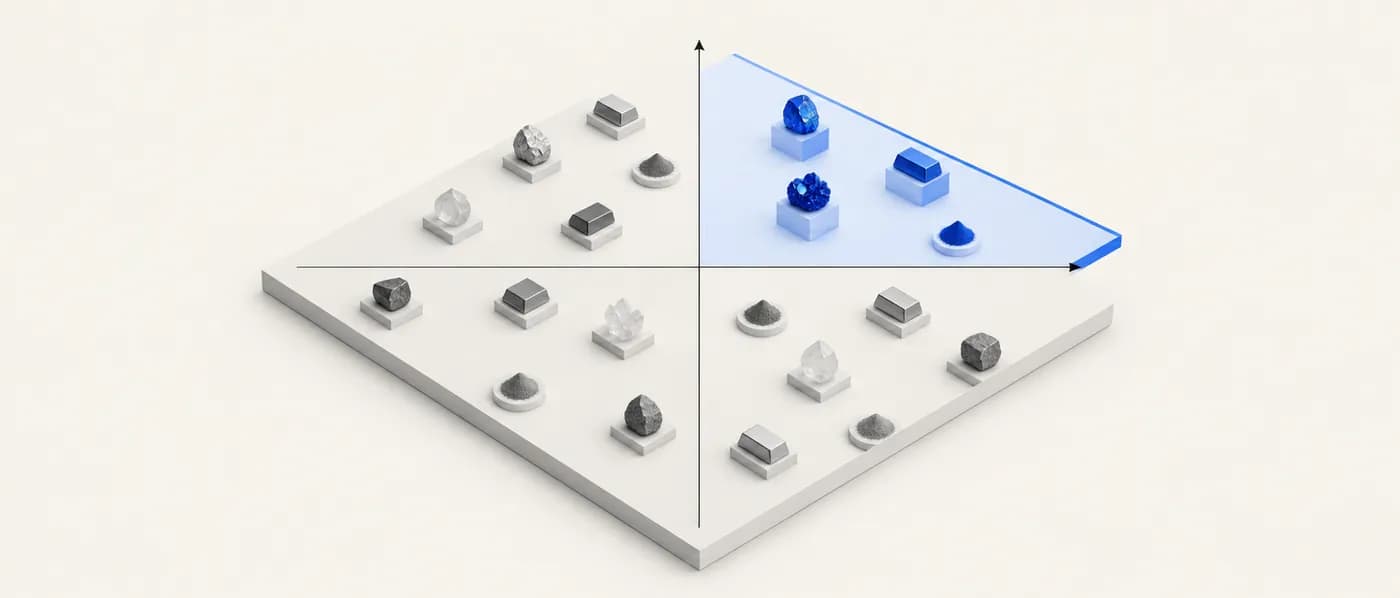
Whitespace analysis is the mirror image. Using the same patent landscape, you look for composition ranges, processes or applications that no active claim covers, or that are covered only by expired or abandoned filings. Those gaps are candidates for your own patent filings and for research directions with fewer legal obstacles.
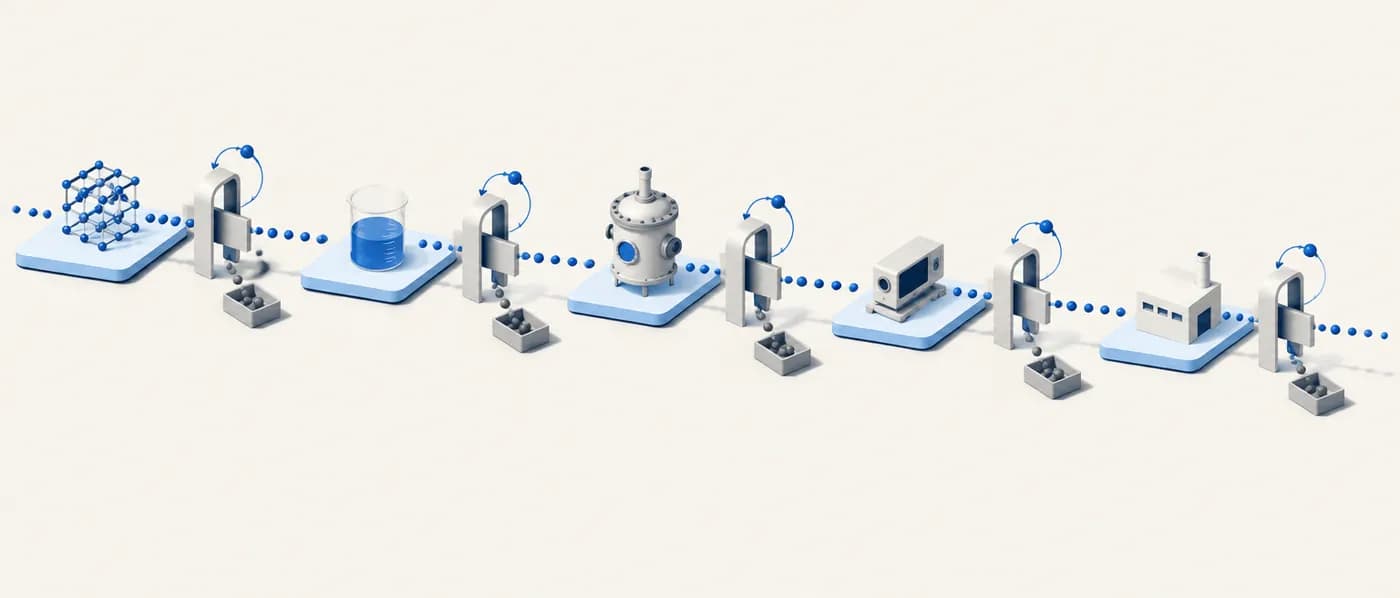
Materials teams typically run a technical prescreen: they map relevant patent families, read the independent claims, compare them element by element with the planned material and process, and flag risks. A formal FTO opinion is then done by qualified patent counsel for the specific product and markets. Important: this page explains the R&D workflow and is not legal advice.
Why it matters for R&D decisions
IP problems discovered late are expensive: a redesign after scale-up, a licence negotiated from a weak position, or a blocked market. A prescreen at the shortlist stage costs a fraction of that and changes R&D choices: you can steer composition ranges, dopants or processing routes away from crowded claim space, and toward whitespace you could protect yourself. It also makes conversations with counsel faster and cheaper, because you arrive with a mapped landscape and specific questions.
How to apply it, step by step
- 1Define the product precisely
Write down the composition range, structure, key processing steps, form (powder, film, coating), and the intended use and markets. Infringement is assessed against what you actually make and where you sell it.
- 2Search by concept, not just keywords
Combine keyword, composition and classification searches. Patent classes such as the Cooperative Patent Classification (CPC) group related inventions; for example, CPC H01M covers batteries and fuel cells, and B01J includes catalysts (groups B01J 21/00–38/00). Include pending applications, which are usually published about 18 months after the earliest filing (priority) date.
- 3Filter to live, relevant families
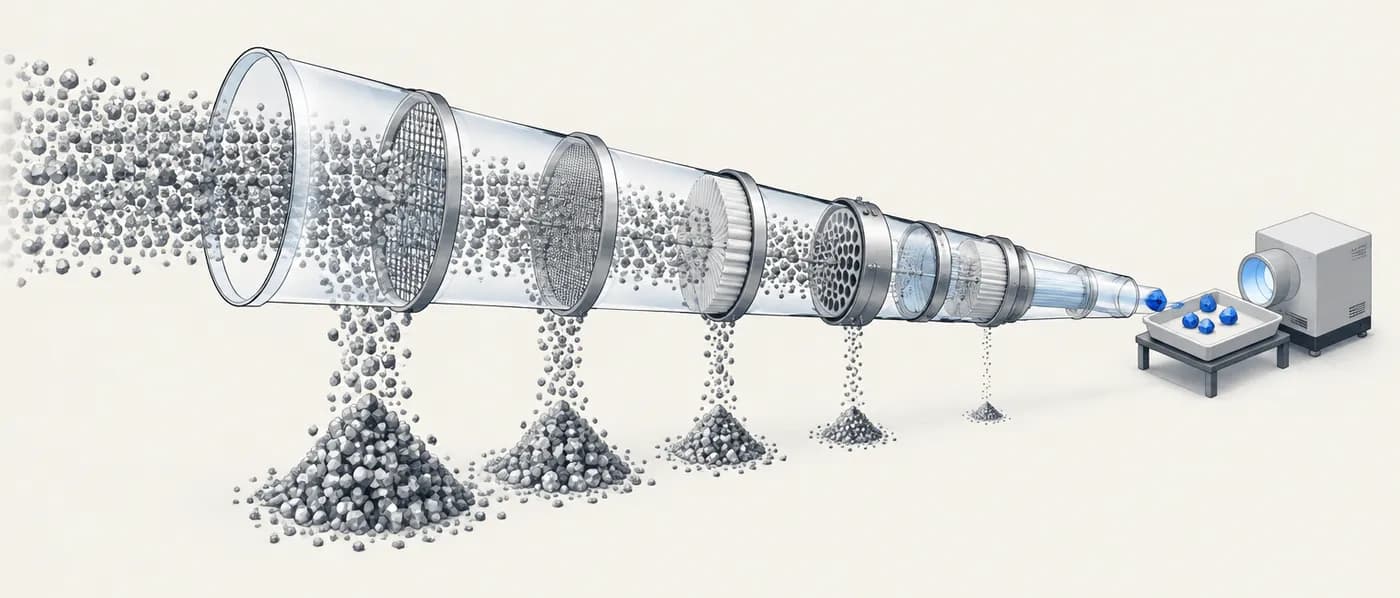
Group results into patent families, then keep those in force (or pending) in your target countries. Check legal status per country: one family member can have lapsed while another is still active.
- 4Read the independent claims element by element
For each relevant claim, list its elements and check whether your product has every one. Generally a claim is only infringed if all of its elements are present (literally or, in some jurisdictions, by equivalents). Note composition ranges, process conditions and use limitations.
- 5Map the whitespace
Plot claimed composition ranges and processes against the space you care about. Gaps, expired families and narrow claims show where you can operate or file.
- 6Hand over to counsel
Summarise high-risk claims, the reasons, and open questions. A qualified patent attorney gives the FTO opinion; your prescreen focuses their time.
Worked examples
LiFePO₄ cathodes: why an old chemistry is open to new entrants
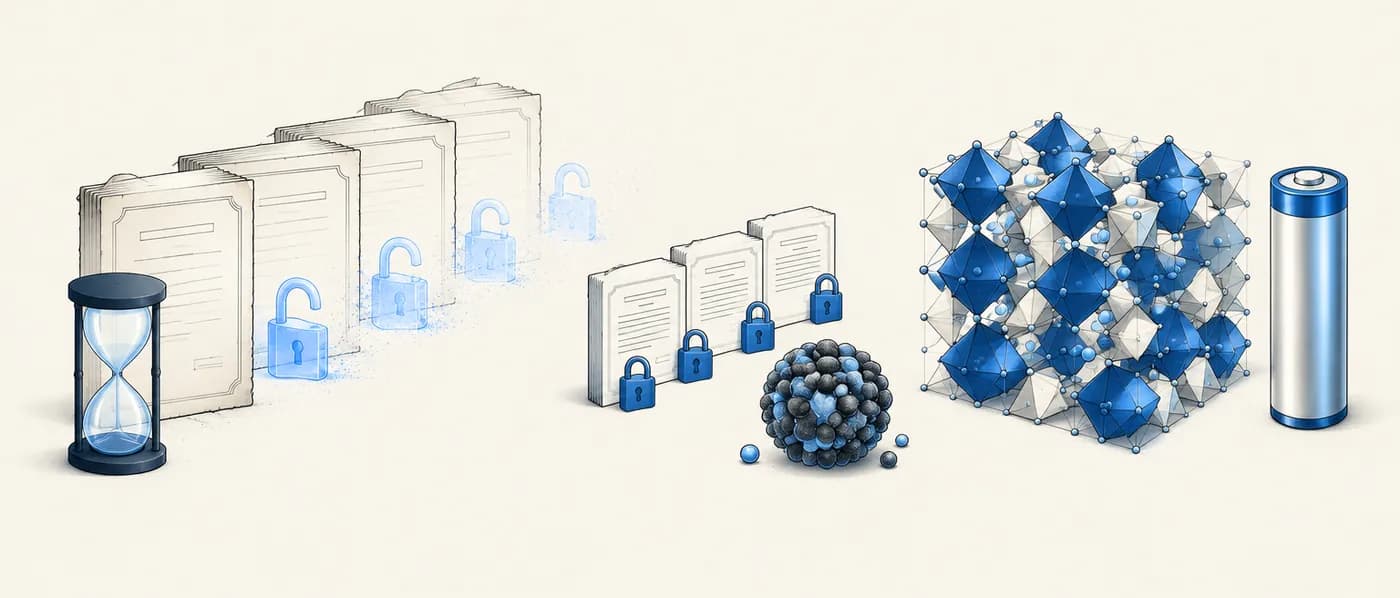
LiFePO₄ (LFP) as a cathode was reported by Padhi, Nanjundaswamy and Goodenough in 1997. Foundational patents covering the olivine material and important improvements such as carbon coating were filed in the late 1990s and early 2000s.
- 01Identify foundational families: the olivine phosphate cathode patents from the University of Texas and carbon-coating patents associated with Hydro-Québec and collaborators.
- 02Check expiry: with a 20-year term from filing, families filed around 1996–2002 would expire around 2016–2022, subject to term adjustments and jurisdiction.
- 03Check what remains: newer patents on specific dopants, particle morphologies, coatings and manufacturing processes can still be in force.
- 04Conclusion for a prescreen: the base material is likely free of its earliest patents in many markets, but each specific product configuration must still be checked against later, narrower patents.
An expired foundational patent does not make a product “free”. Later, narrower patents on the details often matter more.
Finding whitespace in a doped composition (hypothetical)
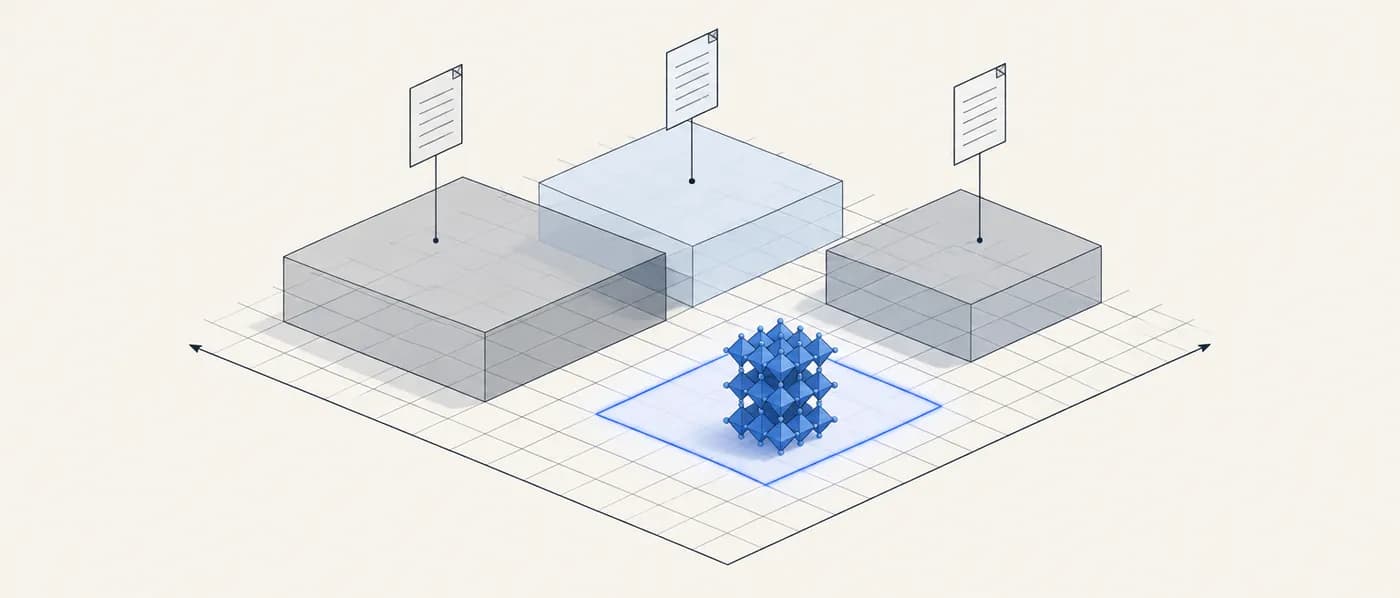
A team wants to develop a doped layered oxide, LiNi₁₋ₓ₋ᵧMnₓMᵧO₂, with dopant M. All claims below are hypothetical, for illustration.
- 01Landscape shows three live families: claim 1 covers M = Al with 0.01 ≤ y ≤ 0.05; claim 2 covers M = Mg or Ti with 0.005 ≤ y ≤ 0.03; claim 3 covers any M with y ≤ 0.02 when made by co-precipitation at pH above 11.
- 02Plot the dopant/fraction space: Al above 0.05, and Nb or Ta at any level, are not covered by claims 1 or 2.
- 03Claim 3 is a process claim: any dopant at y ≤ 0.02 made by high-pH co-precipitation is covered. A solid-state route or y > 0.02 avoids it.
- 04Whitespace candidates: Nb- or Ta-doped compositions with y between 0.02 and 0.05 made by a non-claimed route. Flag them to counsel for confirmation and for a possible filing.
Composition limits, process conditions and use limitations all define claim boundaries. Whitespace is often found by changing one of them.
A catalyst process claim that blocks a ‘new’ material (hypothetical)
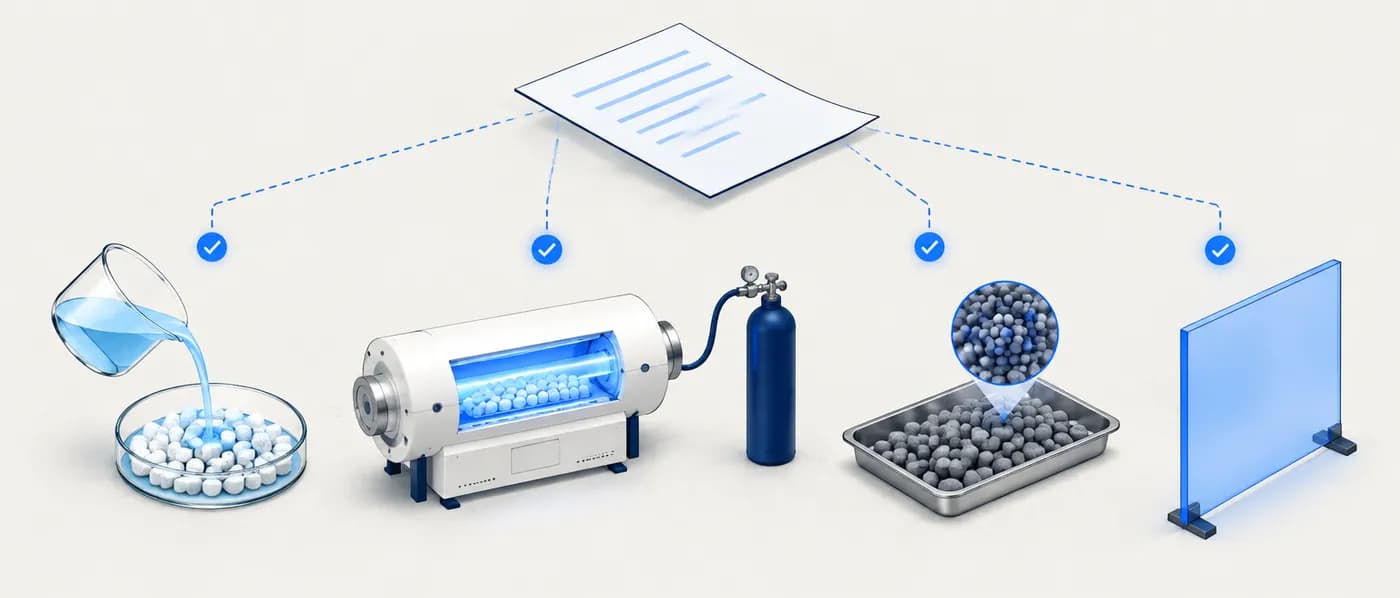
A team has a supported Ni–Fe catalyst whose composition is not claimed anywhere they can find. They plan to make it by impregnation followed by reduction in hydrogen at 450 °C.
- 01Composition search: no live claims on the specific Ni:Fe ratio and support. Low risk on composition.
- 02Process search finds a live hypothetical claim: “a method of making a supported bimetallic catalyst comprising impregnating … and reducing in hydrogen at 400–500 °C”.
- 03Element-by-element check: impregnation ✓, bimetallic ✓, hydrogen reduction ✓, temperature in range ✓. All elements are present.
- 04Options: change the activation step (for example, a different reduction temperature or atmosphere), license, or ask counsel to assess the claim’s validity and scope.
Composition-only searches miss process and use claims. Always search how you make it and what it’s for, not just what it is.
Claim types to search for
| Claim type | What it covers | Example (generic) |
|---|---|---|
| Composition / product | The material itself, often as a range | “A compound of formula LiₐMₓPO₄ wherein …” |
| Process / method | How the material or device is made | “A method comprising calcining at 600–800 °C under inert gas …” |
| Use / application | A specific use of a material | “Use of compound X as a cathode in a rechargeable battery” |
| Device / system | A product that incorporates the material | “A battery cell comprising a cathode of …” |
When to use it — and when not to
- Before committing significant lab, pilot or partnership resources to a candidate.
- When choosing between composition ranges, dopants or processing routes that perform similarly.
- When planning your own filings and looking for defensible whitespace.
- Before licensing discussions, partner due diligence or investor diligence.
- As a substitute for a legal FTO opinion before launch. That requires qualified counsel.
- To judge whether a patent is valid. Validity is a legal question with its own analysis.
- When the product definition is still vague. A prescreen on a moving target misses the claims that matter.
Common mistakes
Applying it in Lattice Graph
LatticeGraph can link candidate compositions to related patent documents so R&D can start a structured prescreen early and hand counsel a focused list.
- 01Shortlist candidates, then open the IP landscape view to see related patent documents (title, applicant, year), patent counts per element and a whitespace assessment.
- 02Use the IP landscape and patent-whitespace views as a map of where to look. They have not checked compositions against claims, so retrieve the full patents and read the claims yourself.
- 03Record flagged claims, their jurisdictions and your element-by-element notes in your evidence pack.
- 04Share your notes with patent counsel. The prescreen informs their opinion; it does not replace it.
Frequently asked questions
How long does a patent last?
In most jurisdictions, 20 years from the earliest non-provisional filing date, provided maintenance fees are paid. Term adjustments and extensions exist in some cases. Check the legal status of each family member.
If I find prior art that invalidates a patent, am I free?
Possibly, but invalidity is a legal determination. Raise it with counsel rather than relying on your own reading.
What is the difference between FTO and patentability?
FTO asks whether you can operate without infringing others’ patents. Patentability asks whether your own invention is new and inventive enough to be patented. A product can be patentable and still infringe someone else’s patent.
References & further reading
- [1]World Intellectual Property Organization (2015). Guidelines for Preparing Patent Landscape Reports. WIPO.Practical guide to patent landscaping and whitespace analysis.
- [2]35 U.S.C. § 154 — Contents and term of patent; provisional rights.US patent term: 20 years from the earliest non-provisional filing date.
- [3]Padhi, A. K., Nanjundaswamy, K. S., & Goodenough, J. B. (1997). Phospho-olivines as Positive-Electrode Materials for Rechargeable Lithium Batteries. Journal of the Electrochemical Society, 144(4), 1188–1194.Original LiFePO₄ cathode paper.
- [4]European Patent Office and USPTO. Cooperative Patent Classification (CPC) scheme.Classification codes such as H01M (batteries and fuel cells) and B01J (chemical processes, including catalysts) for structured searches.