CS2
carbon disulfide · carbon bisulfide
Carbon disulfide is a highly volatile and reactive insulating liquid widely used as a chemical solvent and precursor in industrial manufacturing.
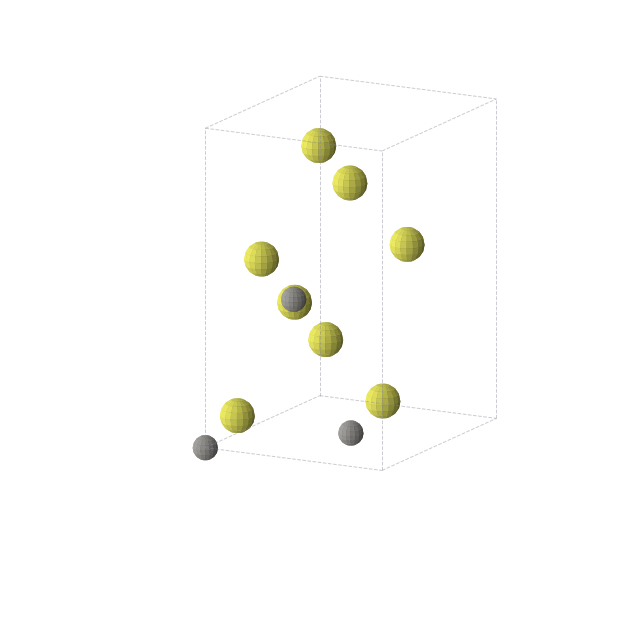
About carbon disulfide
Carbon disulfide is a simple inorganic compound characterized by its insulating electronic nature. Despite its structural simplicity, it exhibits significant polymorphism, with numerous reported arrangements documented across materials databases. Its chemical behavior is marked by high volatility and reactivity, which defines its utility in synthetic chemistry. Because it sits above the thermodynamic hull, it is considered a metastable species that requires careful handling and specific conditions for synthesis and storage. Its role as a solvent and chemical intermediate remains vital in various industrial processes, leveraging its unique ability to dissolve a wide range of organic and inorganic substances.
Key Properties
Cross-validated computational properties for carbon disulfide, aggregated across 5 databases.
Band GapEnergy needed to move an electron from the valence band to the conduction band. Lower or zero values tend to behave more metallic; larger gaps are more insulating or semiconducting.
Energy Above HullThermodynamic distance from the most stable set of competing phases. 0 eV/atom is on the convex hull; small positive values may still be experimentally accessible.
StabilityA plain-language summary of the best reported energy-above-hull result. It reflects whether the lowest-energy structure is on, near, or far from the stability hull.
StructuresCount of reported calculated crystal structures for this formula, including alternate polymorphs, source databases, and observed space groups.
Cross-Source DFT Agreement
How well independent DFT databases agree on the thermodynamics of CS2. Tight agreement means computed properties can be trusted without re-running calculations.
Agreement ScoreA normalized confidence score summarizing how closely independent DFT databases agree. Higher scores mean tighter cross-source agreement.
Hull SpreadDifference between the highest and lowest energy-above-hull values reported by comparable sources. Smaller spread means less thermodynamic disagreement.
Sources ComparedNumber and names of computational sources with comparable entries for this formula.
Space Group ConsensusWhether independent sources predict the same crystal symmetry for the lowest-energy structure.
Reported Structures
Lowest-energy structures reported for CS2, ranked by energy above hull.
| Space GroupSymmetry classification of the crystal arrangement. The number is the international space-group index. | Crystal SystemBroad lattice family, such as cubic, tetragonal, monoclinic, or triclinic, derived from unit-cell symmetry. | Band Gap (eV)Electronic gap calculated for this specific reported structure, measured in electronvolts. | E above hull (eV/atom)Thermodynamic distance from the convex hull for this structure, normalized per atom. Lower is generally more stable. | E/atom (eV)Computed total energy normalized per atom. Use energy above hull, not this value alone, when comparing stability. | Density (g/cm³)Mass per relaxed crystal volume, reported in grams per cubic centimeter. |
|---|---|---|---|---|---|
| Cmce (No. 64) | orthorhombic | 3.43 | 0.2258 | -8.446 | 1.18 |
| — | — | 3.09 | 0.2273 | 0.080 | — |
| — | — | 3.26 | 0.2282 | 0.081 | — |
| — | — | 3.15 | 0.2311 | 0.084 | — |
| — | — | 3.37 | 0.2336 | 0.086 | — |
| Cmce (No. 64) | orthorhombic | 2.88 | 0.2607 | 0.248 | — |
| — | — | 0.00 | 1.0379 | 0.891 | — |
| — | — | 0.00 | 1.3020 | 1.155 | — |
| — | — | 0.00 | 1.4812 | 1.334 | — |
| — | — | 0.00 | 1.6515 | 1.504 | — |
| P6/mmm (No. 191) | hexagonal | 0.00 | 2.0823 | 2.070 | — |
| Pm (No. 6) | monoclinic | 0.00 | 2.1843 | 2.172 | — |
Applications
Where carbon disulfide is used.
Patent Landscape
3 patents reference CS2 or close compositional variants.
| Patent | Title | Assignee | Granted |
|---|---|---|---|
| 4735788 | Process of removing of COS and CS.sub.2 compounds contained in an industrial gas | — | — |
| 6444185 | Process for recovering as sulfur the compounds H2S, SO2, COS and/or CS2 in a tail gas from a sulfur plant | — | — |
| 4399112 | Process for the catalytic incineration of residual gases containing a low content of at least one sulfur compo | — | — |
Frequently Asked Questions
Common questions about carbon disulfide, answered from cross-validated data.
What is CS2?
Carbon disulfide is a highly volatile and reactive insulating liquid widely used as a chemical solvent and precursor in industrial manufacturing.
What is CS2 used for?
What is the band gap of CS2?
Is CS2 a metal, semiconductor, or insulator?
Is CS2 thermodynamically stable?
What is the crystal structure of CS2?
What is the density of CS2?
How many polymorphs of CS2 are known?
What elements does CS2 contain?
Where does the data for CS2 come from?
How It Compares
As a standalone compound in its chemical category, carbon disulfide serves as a foundational example of a volatile, insulating carbon-sulfur system. Unlike more complex or stable solid-state materials, its identity is defined by its high reactivity and the relative ease with which it transitions between different structural states, highlighting the challenges of maintaining stability in such high-energy molecular configurations.
Data sources & attribution
- materials_project — Data from the Materials Project (materialsproject.org). Cite: Jain et al., APL Materials 1, 011002 (2013). (CC-BY-4.0)
- oqmd — Data from the OQMD (oqmd.org). Cite: Saal et al., JOM 65, 1501 (2013); Kirklin et al., npj Comp. Mater. 1, 15010 (2015). (CC-BY-4.0)
- jarvis — Data from JARVIS (jarvis.nist.gov), NIST. Cite: Choudhary et al., npj Comp. Mater. 6, 173 (2020). (LicenseRef-US-Gov-PD)
- mpaloe — Data from MP-ALOE. Cite: Kuner et al., npj Comput. Mater. (2025), doi:10.1038/s41524-025-01834-9.
Analyze CS2 in the Lattice Graph platform
Polymorph comparison, confidence scoring, supply-chain risk, and patent monitoring — across 85 source databases.
Explore the Platform →