NiPd
NiPd is a metallic, metastable alloy of nickel and palladium used primarily in catalytic research and materials science applications.
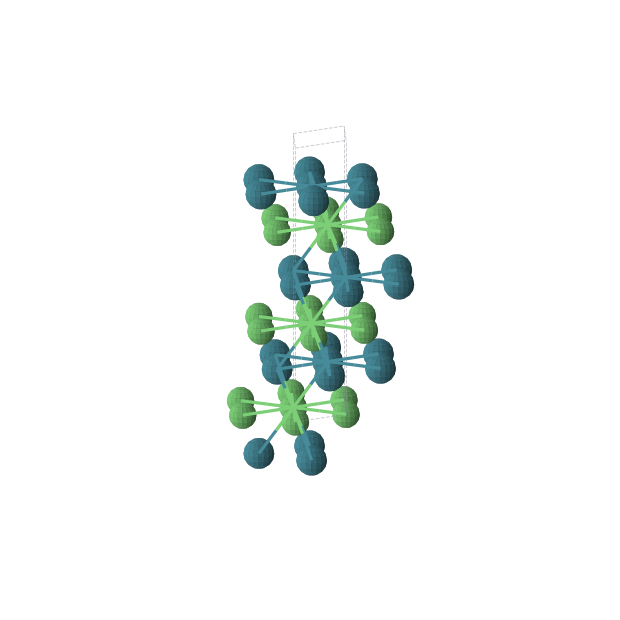
About NiPd
NiPd is a metallic alloy composed of nickel and palladium, belonging to the class of platinum-group alloy catalysts. As a metastable material, it represents a specialized configuration of transition metals that is frequently studied for its unique surface reactivity and structural properties. The material is characterized by its lack of a band gap, confirming its metallic nature. Researchers investigate this compound to understand how combining these specific elements influences catalytic pathways in chemical processing. Its structural diversity is highlighted by numerous reported configurations across multiple databases, reflecting its significance in materials science research. This alloy is primarily utilized in experimental catalysis, where its electronic environment is leveraged to optimize reaction kinetics for various industrial and laboratory applications.
Key Properties
Cross-validated computational properties for NiPd, aggregated across 5 databases.
Band GapEnergy needed to move an electron from the valence band to the conduction band. Lower or zero values tend to behave more metallic; larger gaps are more insulating or semiconducting.
Energy Above HullThermodynamic distance from the most stable set of competing phases. 0 eV/atom is on the convex hull; small positive values may still be experimentally accessible.
StabilityA plain-language summary of the best reported energy-above-hull result. It reflects whether the lowest-energy structure is on, near, or far from the stability hull.
StructuresCount of reported calculated crystal structures for this formula, including alternate polymorphs, source databases, and observed space groups.
Cross-Source DFT Agreement
How well independent DFT databases agree on the thermodynamics of NiPd. Tight agreement means computed properties can be trusted without re-running calculations.
Agreement ScoreA normalized confidence score summarizing how closely independent DFT databases agree. Higher scores mean tighter cross-source agreement.
Hull SpreadDifference between the highest and lowest energy-above-hull values reported by comparable sources. Smaller spread means less thermodynamic disagreement.
Sources ComparedNumber and names of computational sources with comparable entries for this formula.
Space Group ConsensusWhether independent sources predict the same crystal symmetry for the lowest-energy structure.
Applications
Where NiPd is used.
Patent Landscape
1 patent reference NiPd or close compositional variants.
| Patent | Title | Assignee | Granted |
|---|---|---|---|
| 11802335 | NiPd nano-alloy film as a electrocatalyst and methods of preparation thereof | — | — |
Frequently Asked Questions
Common questions about NiPd, answered from cross-validated data.
What is NiPd?
NiPd is a metallic, metastable alloy of nickel and palladium used primarily in catalytic research and materials science applications.
What is NiPd used for?
What is the band gap of NiPd?
Is NiPd a metal, semiconductor, or insulator?
Is NiPd thermodynamically stable?
How many polymorphs of NiPd are known?
What elements does NiPd contain?
Where does the data for NiPd come from?
How It Compares
Within the platinum-group alloy catalysts class.
Within the diverse family of platinum-group alloy catalysts, NiPd occupies a distinct niche compared to compounds like BaPd or GeRu. While many members of this class exhibit varying degrees of stability and structural complexity, NiPd is notable for its metastable nature, which often provides a higher degree of surface activity compared to more thermodynamically rigid counterparts like IrSe2 or As2Pt.
Related Compounds
Other Platinum-Group Alloy Catalysts in the database.
Data sources & attribution
- latticegraph — Lattice Graph Materials Intelligence Platform
Analyze NiPd in the Lattice Graph platform
Polymorph comparison, confidence scoring, supply-chain risk, and patent monitoring — across 53 integrated data sources.
Explore the Platform →