Mg2CrWO6
Mg2CrWO6 is a metastable, semiconducting complex oxide composed of magnesium, chromium, and tungsten that is studied for its diverse structural configurations.
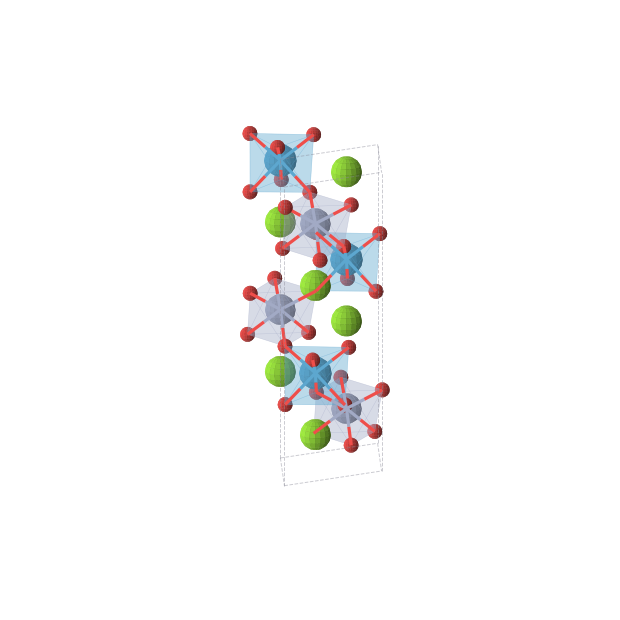
About Mg2CrWO6
Mg2CrWO6 is a complex oxide featuring a combination of magnesium, chromium, and tungsten. As a semiconducting material, it represents an interesting subject for researchers exploring the intersection of transition metal oxides and their electronic behavior. Its metastable nature suggests that its synthesis and structural integrity are highly sensitive to processing conditions, making it a focus for studies on phase stability. The compound exists in multiple structural configurations, reflecting the versatility of its atomic arrangement. Its role as a semiconductor positions it within a broader category of functional oxides that are investigated for their potential in electronic and optoelectronic applications where specific band characteristics are required.
Key Properties
Cross-validated computational properties for Mg2CrWO6, aggregated across 3 databases.
Band GapEnergy needed to move an electron from the valence band to the conduction band. Lower or zero values tend to behave more metallic; larger gaps are more insulating or semiconducting.
Energy Above HullThermodynamic distance from the most stable set of competing phases. 0 eV/atom is on the convex hull; small positive values may still be experimentally accessible.
StabilityA plain-language summary of the best reported energy-above-hull result. It reflects whether the lowest-energy structure is on, near, or far from the stability hull.
StructuresCount of reported calculated crystal structures for this formula, including alternate polymorphs, source databases, and observed space groups.
Applications
Where Mg2CrWO6 is used.
Frequently Asked Questions
Common questions about Mg2CrWO6, answered from cross-validated data.
What is Mg2CrWO6?
Mg2CrWO6 is a metastable, semiconducting complex oxide composed of magnesium, chromium, and tungsten that is studied for its diverse structural configurations.
What is Mg2CrWO6 used for?
What is the band gap of Mg2CrWO6?
Is Mg2CrWO6 a metal, semiconductor, or insulator?
Is Mg2CrWO6 thermodynamically stable?
How many polymorphs of Mg2CrWO6 are known?
What elements does Mg2CrWO6 contain?
Where does the data for Mg2CrWO6 come from?
How It Compares
As a unique complex oxide, Mg2CrWO6 occupies a specialized niche in materials science. Unlike more conventional binary or ternary oxides, its structural diversity and metastable character distinguish it as a compound that requires precise control during synthesis to achieve desired phases, serving as a distinct example of how multi-element oxide systems can be tuned for specific electronic properties.
Data sources & attribution
- latticegraph — Lattice Graph Materials Intelligence Platform
Analyze Mg2CrWO6 in the Lattice Graph platform
Polymorph comparison, confidence scoring, supply-chain risk, and patent monitoring — across 53 integrated data sources.
Explore the Platform →