H8B4Li4
H8B4Li4 is a semiconducting complex hydride containing lithium and boron that is studied for its potential role in hydrogen storage technologies.
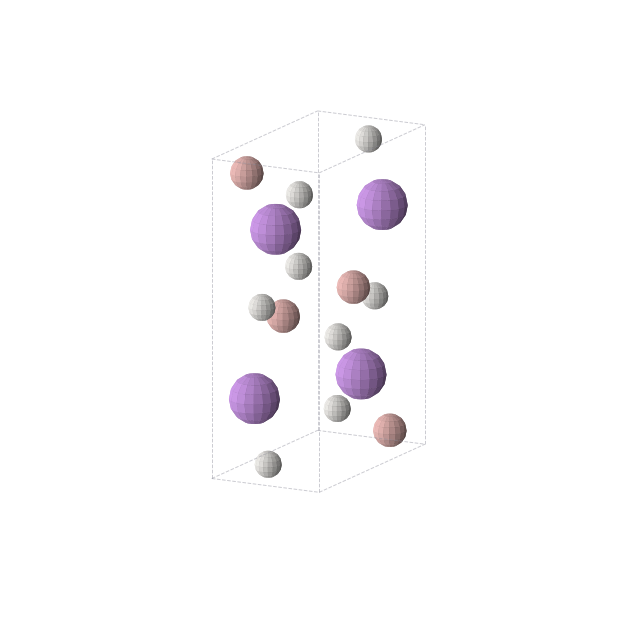
About H8B4Li4
H8B4Li4 is a complex hydride composed of boron, hydrogen, and lithium. As a semiconducting material, it represents a specialized configuration within the broader category of hydrogen storage hydrides, drawing interest for its potential to facilitate dense hydrogen packing in chemical systems. Despite its complex composition, it remains a subject of theoretical investigation regarding its structural stability and electronic behavior. Because it sits above the thermodynamic hull, it is considered a metastable phase, which poses challenges for synthesis but provides a unique case study for understanding the energy landscapes of light-element hydrides. Its study is vital for researchers aiming to optimize materials for efficient hydrogen delivery and storage applications.
Key Properties
Cross-validated computational properties for H8B4Li4, aggregated across 3 databases.
Band GapEnergy needed to move an electron from the valence band to the conduction band. Lower or zero values tend to behave more metallic; larger gaps are more insulating or semiconducting.
Energy Above HullThermodynamic distance from the most stable set of competing phases. 0 eV/atom is on the convex hull; small positive values may still be experimentally accessible.
StabilityA plain-language summary of the best reported energy-above-hull result. It reflects whether the lowest-energy structure is on, near, or far from the stability hull.
StructuresCount of reported calculated crystal structures for this formula, including alternate polymorphs, source databases, and observed space groups.
Applications
Where H8B4Li4 is used.
Frequently Asked Questions
Common questions about H8B4Li4, answered from cross-validated data.
What is H8B4Li4?
H8B4Li4 is a semiconducting complex hydride containing lithium and boron that is studied for its potential role in hydrogen storage technologies.
What is H8B4Li4 used for?
What is the band gap of H8B4Li4?
Is H8B4Li4 a metal, semiconductor, or insulator?
Is H8B4Li4 thermodynamically stable?
How many polymorphs of H8B4Li4 are known?
What elements does H8B4Li4 contain?
Where does the data for H8B4Li4 come from?
How It Compares
Within the hydrogen storage hydrides class.
Within the class of hydrogen storage hydrides, H8B4Li4 stands out as a more complex, multi-element system compared to simpler, binary hydrides like LiH or MgH2. While compounds such as LiH are well-characterized, stable, and widely utilized, H8B4Li4 represents a more intricate structural arrangement that reflects the ongoing search for materials with superior gravimetric storage capacities, even if it lacks the robust thermodynamic stability found in more conventional members of the group.
Related Compounds
Other Hydrogen Storage Hydrides in the database.
Data sources & attribution
- latticegraph — Lattice Graph Materials Intelligence Platform
Analyze H8B4Li4 in the Lattice Graph platform
Polymorph comparison, confidence scoring, supply-chain risk, and patent monitoring — across 53 integrated data sources.
Explore the Platform →